I’ve always believed that the ocean is a mirror—what we bring to it, it reflects back. During a recent trip to Sumbawa, Indonesia, that belief was challenged and then gently deepened.
I wasn’t just there to tick something off my travel list. I was curious. Curious about the growing global interest in whale sharks, and why so many people are turning to Indonesia—especially Saleh Bay in Sumbawa—for encounters that feel less like a tour and more like a moment of truth.
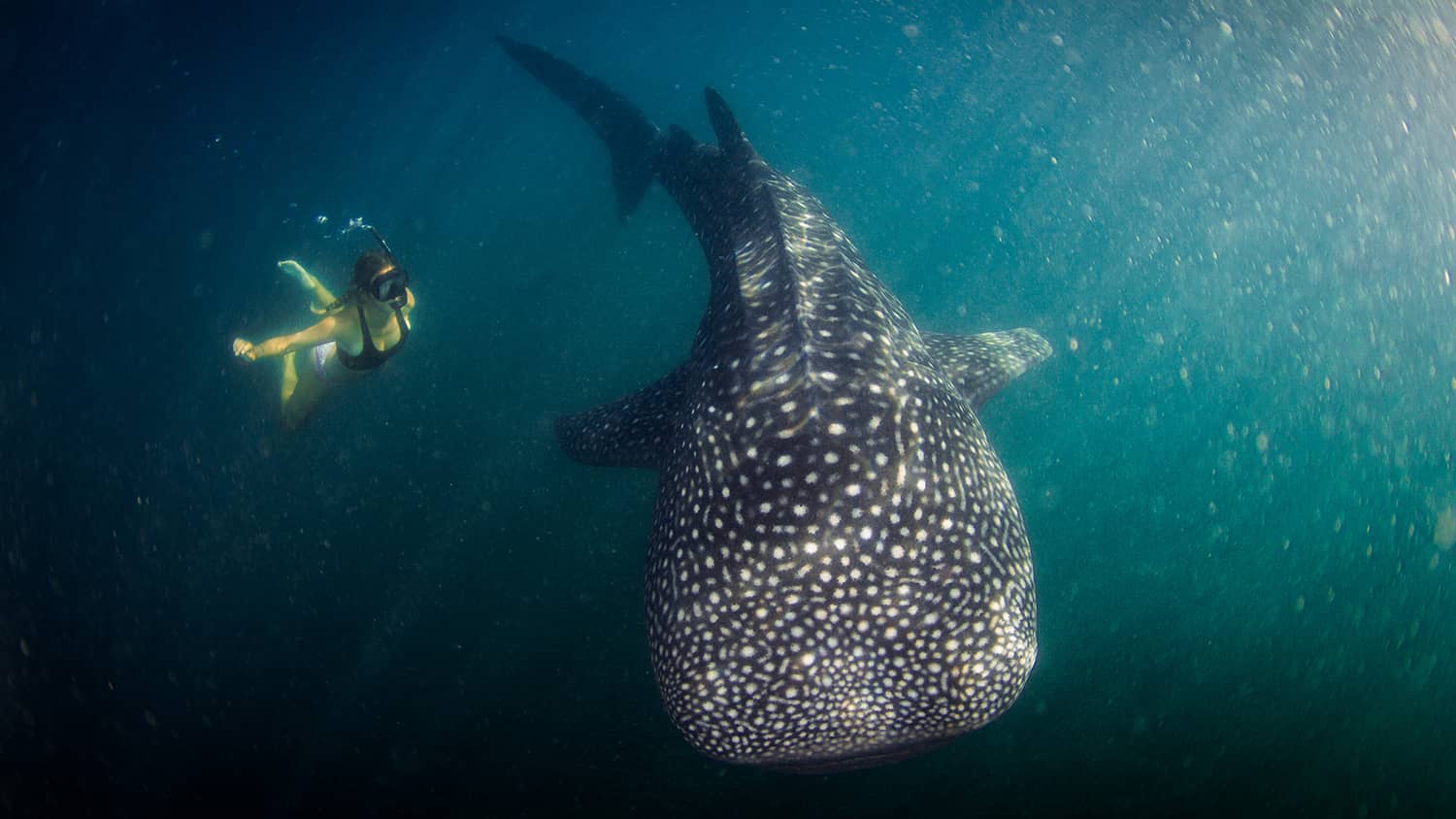
On my second morning, as the sky shifted from charcoal to soft gold, we drifted quietly in a wooden boat over the calm waters of Saleh Bay. No crowds. No blaring music. Just anticipation. I slipped into the water and waited. And then, just like that, a spotted silhouette appeared beneath me, moving with effortless rhythm.
It was my first time seeing a whale shark in the wild.
But this story isn’t really about me. It’s about what these creatures—and the communities that live with them—can teach us if we’re willing to listen.
Whale Shark Tourism Is Growing—But It’s Not All the Same
All over the world, people are chasing encounters with whale sharks. From the Ningaloo Reef in Australia to Isla Holbox in Mexico, these gentle giants draw thousands of curious travelers every year.
Indonesia is no exception. With its vast network of coral reefs and nutrient-rich waters, the archipelago has become a hotspot for these slow-moving, filter-feeding marvels.
But what makes Indonesia, and specifically a whale shark tour Sumbawa, stand out isn’t just the sharks—it’s the way people meet them.
A Different Kind of Experience in Sumbawa
In many places, whale shark encounters are brief and intense. Boats cluster. Tourists jump in. Guides point and shout. It can feel rushed—like nature is performing on cue.
In Sumbawa’s Saleh Bay, it’s quieter.
The sharks come near local fishing platforms, drawn not by bait but by the same small fish and plankton the fishermen catch. There’s no artificial feeding. No chasing. Just a natural overlap between human life and marine rhythm.
And that’s exactly what makes this place special.
When I joined the Saleh Bay whale shark tour, I noticed how different the vibe was. The guides were patient. They spoke of the sharks like familiar neighbors, not attractions. The boats kept their distance. We entered the water gently, slowly. We were guests, not intruders.
And somehow, that made the experience even more powerful.
Lessons from the Water
What struck me wasn’t just the sight of the whale sharks, but what being around them brought out in people. In silence, floating side by side with something so large and so peaceful, our voices softened. The need to document everything vanished. We just watched. Listened. Respected.
It reminded me that these animals don’t owe us anything. They’re not here for our entertainment. They’re just there, part of the world. Our job is to witness without harm.
That shift in mindset—from taking to understanding—is something the world desperately needs.
And somehow, in this corner of Indonesia, it’s already happening.
Community, Culture, and Conservation
Whale sharks in Sumbawa aren’t new. Local fishermen have seen them for generations. But it’s only recently that their presence has been recognized as something worth protecting—and sharing.
What’s beautiful is that the rise in tourism has also sparked a rise in local marine education. Kids now grow up learning not just how to fish, but how to understand the sea. Conservation workshops are held. Scientists come to collaborate. Families take pride in the fact that people from across the world are coming to their bay—not to take, but to learn.
When tourism supports local communities and elevates their knowledge and stories, it becomes a powerful force for good.
When Tourism Teaches
People often say that travel broadens your perspective. But that only happens when travel invites you to slow down. To pay attention. To let the place shape you.
That’s what a whale shark experience in Saleh Bay offers. It’s not about perfect photos or ticking boxes. It’s about being part of something ancient and alive.
Watching the whale sharks move slowly through the morning light, I thought about how fragile it all is. The balance. The beauty. The trust. And I thought about how easily it could be lost if we don’t approach it with care.
Indonesia has a chance to lead—not just in offering incredible wildlife encounters, but in how they’re done. Saleh Bay is showing the way.
A Blueprint for Mindful Marine Tourism
So what can the world learn from Indonesia’s whale shark spots?
Here’s what stood out to me:
- Respect works. When humans back off, animals stay curious. When we create space, we’re often rewarded with presence.
- Community matters. Conservation isn’t just a scientist’s job. It’s strongest when it includes the people who live with the animals every day.
- Tourism can educate. A single conversation with a guide, or a moment in the water, can shift how someone sees the ocean forever.
- Silence teaches. We don’t always need more noise or action. Sometimes, the quietest encounters are the most unforgettable.
The Memory That Stays
Back on land, I couldn’t stop thinking about that morning. About the way the whale shark’s massive body moved like it was part of the sea itself. About the guide who spoke with pride about the sharks he grew up seeing. About the way everyone on our boat sat quietly afterward, changed in some small way.
Travel doesn’t always need to be loud to be meaningful.
Sometimes, the best stories are whispered. Sometimes, the best lessons come when we stop trying to learn and just observe.